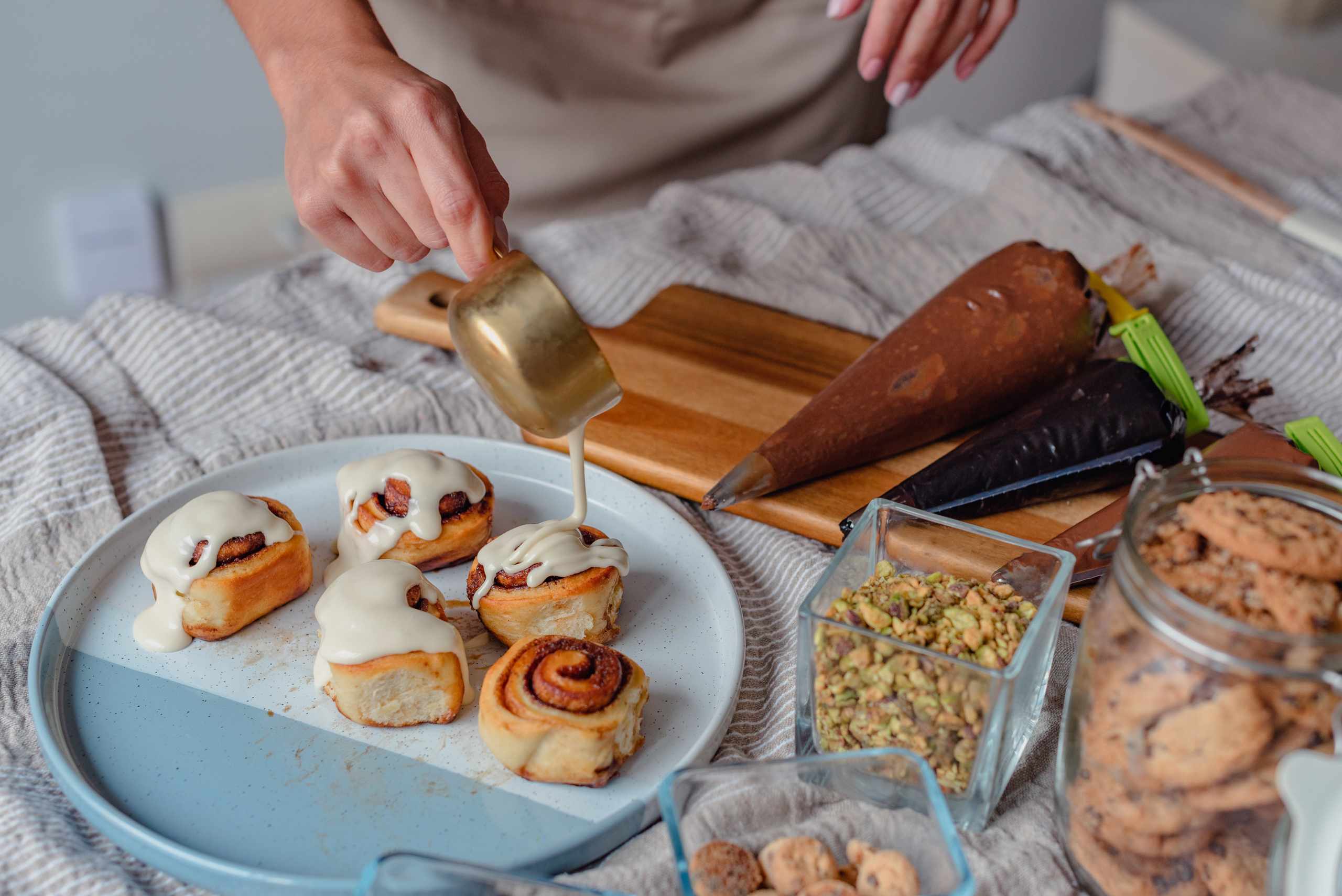
How Sweet Practice Works
A practical look at how SweetHarmony Course builds confectionery basics through measuring, mixing, texture checks, cooling, filling, and simple decoration.
The Practice Path
Prepare The Table
Learners begin by reading the recipe, setting out bowls, weighing ingredients, and checking that pans, parchment, and tools are ready before mixing starts.
Watch The Mixture
Practice focuses on batter thickness, dough feel, whipped cream softness, frosting stiffness, and the small texture changes that appear before the next step.
Bake And Cool
Oven temperature, rise, crumb, doneness, cooling racks, and setting time are treated as part of the dessert, not as details to rush past.
Finish With Control
Layering, filling, smoothing, piping, and decorating are introduced after the base dessert is stable enough to handle without melting or sliding.
What Guides The Course
The approach stays close to real kitchen actions, visible checks, and repeatable home practice.
Measure Before Guessing
A digital scale and prepared bowls help learners see why flour, sugar, eggs, and cream cannot be adjusted by eye without changing the result.
Texture Comes First
Instead of moving through a recipe automatically, learners pause during folding, melting, and smoothing to notice whether the mixture is ready.
Mistakes Give Clues
A dense sponge, loose cream, cracked glaze, or sliding filling is used as a practical signal to check mixing, heat, cooling, or thickness.
Decoration Waits
Piping bags, nozzles, scrapers, and spatulas are easier to use when the cake layer, cream, frosting, and filling already have the right stability.
A Calmer Way To Learn Dessert Basics
SweetHarmony Course is shaped around the idea that confectionery becomes easier to understand when each action has a visible purpose. Weighing, mixing, baking, cooling, and decorating are practiced as connected steps, not separate tricks.
The course keeps practice at a home-baking level, with simple cakes, creams, fillings, frosting, and small sweets used to build steadier habits. Learners are encouraged to keep notes on oven time, crumb, texture, filling thickness, and what changed after each attempt.
Keep Learning Between Bakes
Use the course notes and contact options to check first desserts, tool needs, practice pace, and the kitchen steps that feel unclear before the next baking session.